Image Processing Toolkit
A toolkit for image processing built from scratch in C, without external libraries.
🌐 GitHub: Image Processing Toolkit
Overview
The Image Processing Toolkit is a project developed entirely in C, with no external libraries, to implement a wide range of fundamental image processing algorithms from scratch. The main motivation was to build a deeper understanding of how core techniques work under the hood by manually handling pixel-level operations, memory management, and algorithmic optimizations.
This toolkit demonstrates how low-level programming can be used to reproduce common computer vision operations efficiently, providing a solid foundation for more advanced applications.
Some features
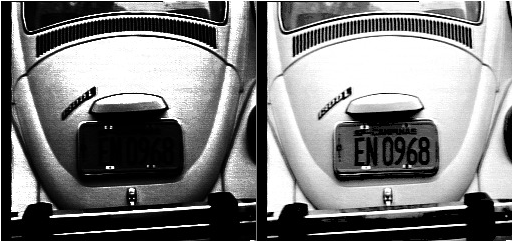
Logarithm Operator
A nonlinear transformation to compress the range of pixel intensities, useful for enhancing darker regions of an image.
Example of the logarithm operator applied to an input image.
Contrast Stretching
A transformation that increases the dynamic range of pixel intensities, improving the visual distinction between light and dark areas.

Contrast stretching applied to enhance image clarity.
Flood Fill
Implements the classic region-filling algorithm, which is essential for segmentation and object isolation tasks.
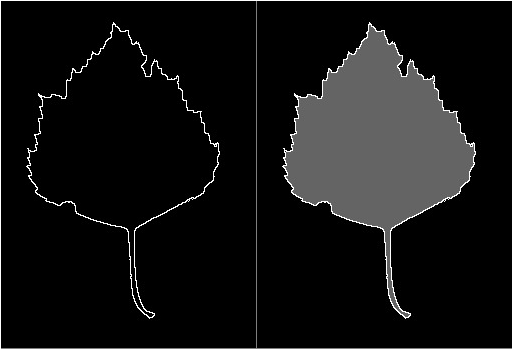
Flood fill used to segment and highlight regions of an image.
Key Takeaways
- Implemented from scratch in C, without relying on OpenCV or other libraries.
- Strengthened knowledge of pixel-level manipulation and low-level memory management.
- Created a modular design that can be expanded with new operators and transformations.